Buy rolemodel.eu ?
We are moving the project
rolemodel.eu .
Are you interested in purchasing the domain
rolemodel.eu ?
domain@kv-gmbh.de · 0541-91531010
Buy rolemodel.eu ?
'Sensing or Intuition sensing?'
Sensing and Intuition are two different ways of perceiving information. Sensing individuals tend to focus on concrete details and facts, relying on their five senses to gather information. They are practical and realistic in their approach. On the other hand, Intuitive individuals are more focused on patterns, possibilities, and the big picture. They are imaginative and future-oriented, often trusting their instincts and gut feelings. Ultimately, whether one leans more towards Sensing or Intuition depends on how they prefer to take in and process information. **
How is intuition explained?
Intuition is often explained as a gut feeling or instinctive knowing that arises without conscious reasoning. It is thought to be a result of unconscious processing of information and experiences, leading to a quick and automatic decision or judgment. Some researchers believe that intuition is a form of pattern recognition, where the brain recognizes familiar patterns and quickly generates a response based on past experiences. Others suggest that intuition may be influenced by emotional cues and nonverbal communication, allowing individuals to pick up on subtle signals and make rapid judgments. Overall, intuition is a complex and multifaceted phenomenon that is still not fully understood. **

Similar search terms for Everyday Intuition
Top-Angebote
Products related to Everyday Intuition:
-
Wilco International LLP How to Win Friends and Influence People by Dale Carnegie Classic Self Help Book on Communication, Leadership, Confidence & Personal DevelopmentDiscover one of the world's best-known personal development books with How to Win Friends and Influence People by Dale Carnegie. First published in 1936, this enduring classic presents practical principles for communicating effectively, building positive relationships and working successfully with other people. Through memorable examples and straightforward advice, Carnegie explores how to make a positive impression, handle disagreements constructively, encourage cooperation and become a more effective communicator. The principles can be applied across everyday life, from personal relationships and social situations to business, management, sales, networking and leadership. Accessible and practical, How to Win Friends and Influence People remains popular with readers interested in improving their communication skills, confidence, interpersonal relationships and professional development. Key Features Classic personal development book by Dale Carnegie Practical principles for improving communication Explores relationships, leadership and interpersonal skills Useful for business, management, sales and networking Helps readers understand effective people skills Suitable for personal and professional development Excellent gift for entrepreneurs, managers and self-improvement readers9,99 £*Shipping: 2,99 £Secure redirect to the provider
-
HARPERCOLLINS The Tree of Yoga: The Definitive Guide To Yoga In Everyday LifeThe definitive guide to yoga in everyday life from B.K.S. Iyengar, the world's most respected yoga teacher. B.K.S. Iyengar has devoted his life to the practice and study of yoga. It was B.K.S. Iyengar's unique teaching style, bringing precision and clarity to the practice, as well as a mindset of 'yoga for all', which has made it into a worldwide phenomenon. His seminal book, 'Light on Yoga', is widely called 'the bible of yoga' and has served as the source book for generations of yoga students around they world. In 'Tree of Yoga', the collected wisdom of his many years of practical practice and its application in real life are brought into a single-volume work. A collected philosophy for life researched through decades of practice by B.K.S. Iyengar, the world's most respected yoga teacher. These are his core teachings and advice for living a long, healthy, happy life. Using the tree as a structural metaphor for both life and yoga practice, the essays cover many aspects of life and practice which are vital to health and happiness and in need of care. This includes: * Yoga and health * Yoga as part of daily life * Childhood and parenthood * Love * Death * Faith - hope and spirituality * Teachers and teaching4,99 £*Shipping: 1,99 £Secure redirect to the provider
-
Hodder Paperbacks Cesars Way by Cesar Millan The Natural, Everyday Guide to Understanding and Correcting Common DogCesars Way by Cesar Millan The Natural, Everyday Guide to Understanding and Correcting Common Dog Description In CESAR'S WAY, Cesar Millan - US dog expert and star of National Geographic Channel's hit show Dog Whisperer with Cesar Millan - helps you see the world through the eyes of your dog so you can finally eliminate problem behaviours. You'll learn: What your dog really needs may not be what you're giving him Why a dog's natural pack instincts are the key to your happy relationship How to relate to your dog on a canine level There are no 'problem breeds', just problem owners Why every dog needs a job How to choose a dog who's right for you and your family And much more!5,29 £*Shipping: 2,99 £Secure redirect to the provider
-
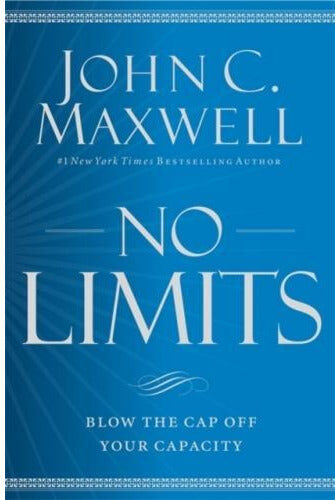
Little Brown Book Group No Limits: Blow the Cap Off Your Capacity by John C. Maxwell – Personal Growth & Leadership Development GuideNo Limits: Blow the CAP Off Your Capacity Description We often treat the word capacity as if it were a natural law of limitation. Unfortunately; most of us are much more comfortable defining what we perceive is off limits rather than what's possible. Could it be that many people have allowed what they perceive as capacity to define them? Have they allowed their perception to limit their attitudes about their potential? In his newest book; John Maxwell identifies 17 core capacities. Some of these are abilities we all already possess; such as energy; creativity and leadership. Others are aspects of our lives controlled by our choices; like our attitudes; character; and intentionality. Maxwell examines each of these 17 capacities; and provides clear and actionable advice on how you can increase your potential in each. He will guide you on how to identify; grow; and apply your critical capacities to your daily life. Once you've blown the 'cap' off your capacities; you'll find yourself more successful--and fulfilled--in your daily life.5,99 £*Shipping: 2,99 £Secure redirect to the provider


-
Is intuition always right?
Intuition is not always right, as it is based on gut feelings and instincts rather than concrete evidence or reasoning. While intuition can sometimes lead to accurate insights or decisions, it can also be influenced by biases, emotions, or limited information. It is important to balance intuition with critical thinking and analysis to make well-informed decisions. Ultimately, the accuracy of intuition depends on the individual and the specific situation. **
-
Good intuition or exaggerated?
It can be difficult to determine whether someone's intuition is good or exaggerated without knowing the specific situation and the individual's track record. Good intuition is often based on a combination of experience, knowledge, and pattern recognition, leading to accurate insights and decisions. However, if someone consistently claims to have intuition without evidence or their predictions frequently prove to be incorrect, it may be a sign of exaggerated intuition. It's important to consider the context and results when evaluating someone's intuition. **
-
Can you guess by intuition?
Intuition is the ability to understand or know something without the need for conscious reasoning. While intuition can sometimes be accurate, it is not always reliable as it is based on personal feelings and experiences. Guessing by intuition can be helpful in certain situations, but it is important to also consider facts and evidence to make more informed decisions. **
-
Fear of loss or intuition?
The choice between fear of loss and intuition depends on the situation and the individual's mindset. Fear of loss can be a powerful motivator, driving people to make decisions based on avoiding negative outcomes. On the other hand, intuition can be a valuable guide, providing a sense of inner knowing and guiding individuals towards the right path. Ultimately, it's important to strike a balance between the two, using fear of loss as a cautionary factor while also trusting one's intuition to make informed decisions. **


How is intuition scientifically explained?
Intuition is scientifically explained as a rapid, unconscious processing of information based on previous experiences and knowledge. It is thought to be the result of the brain's ability to quickly recognize patterns and make connections without conscious awareness. This process is believed to be influenced by both emotional and cognitive factors, allowing individuals to make quick decisions or judgments based on their gut feelings. Research in neuroscience has shown that intuition involves the activation of certain brain regions, such as the insula and the anterior cingulate cortex, which are associated with emotional processing and decision-making. **
What distinguishes intuition from empathy?
Intuition is the ability to understand or know something without the need for conscious reasoning. It is often described as a gut feeling or instinctual understanding. On the other hand, empathy is the ability to understand and share the feelings of another person. It involves being able to put oneself in someone else's shoes and understand their emotions and experiences. While intuition is more about a personal understanding or insight, empathy is about understanding and connecting with others on an emotional level. **
Top-Angebote
Products related to Everyday Intuition:
-
HARPERCOLLINS Clean Eating Alice: Everyday Fitness – Healthy Recipes & Practical Workout Guide for Everyday Wellness by Alice Liveing – Workout & Nutrition GuideTransform your approach to health and fitness with Clean Eating Alice Everyday Fitness: Train Smart, Eat Well and Get the Body You Love by Alice Liveing. This practical, motivating guide combines smart training principles with balanced nutrition to help readers build strength, confidence, and sustainable healthy habits. Alice Liveing shares structured workout plans, approachable meal ideas, and realistic lifestyle advice designed to fit everyday routines — no extremes or quick fixes required. Focused on long-term wellbeing rather than short-term dieting, the book empowers readers to develop a positive relationship with food and exercise while working toward personal fitness goals. Whether you’re new to training or refining your routine, this guide offers clear, supportive direction for lasting results. Why Readers Love This Book: Structured fitness training plans for real-life schedules Balanced nutrition guidance — no fad dieting Encourages sustainable, long-term habits Motivational, beginner-friendly tone Ideal for home or gym-based workouts A smart, accessible roadmap to healthier living, Clean Eating Alice Everyday Fitness helps readers feel strong, energized, and confident.2,80 £*Shipping: 1,99 £Secure redirect to the provider
-
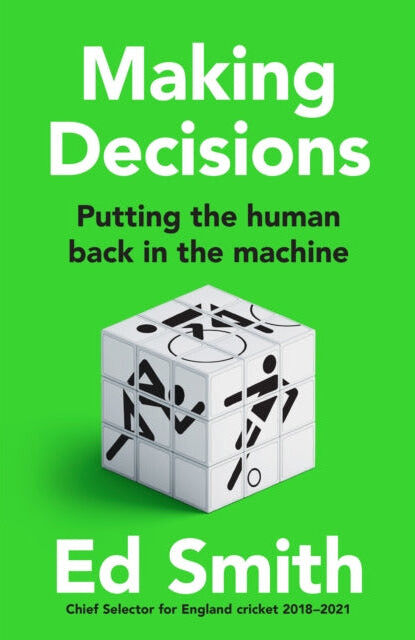
William Collins Making Decisions Book – Leadership, Judgement & Smart Thinking GuideWinning takes many forms. For fans of Matthew Syed, this is a great sports book about leadership, judgement and decision-making - rooted in the theory that helped Ed Smith lead England cricket to sustained success. And to help us all win more.'An absolutely fascinating book' THE GAME, The Times football pod How do you spot the opportunities that others miss?How do you turn a team's performance around?How do you make good decisions amid a tidal wave of information? And how can you improve? As chief selector for the England cricket team, Ed Smith pioneered new methods for building successful teams and watched his decisions tested in real time on the pitch. During his three-year tenure, England averaged 7 wins in every 10 completed matches, better than they have performed before or since. Making Decisions reveals Smith's unique approach to finding success in a fast-changing and increasingly data-reliant world.The best decisions, Smith argues, rely on a combination of differing kinds of intelligence: from algorithms to intuition. This is a truth that the most successful people know: data cannot account for everything, it must be harnessed with human insight. Whatever the power of data, humans aren't finished yet.Sharing for the first time the tools he introduced as England selector, Smith's book captures the immediacy of life at the sharp end, while also exploring frameworks from the top levels of sports, business and the arts. Decision-making is revealed as a creative enterprise, not a reductive system. Making Decisions offers an invaluable guide for those who want a better framework for developing, explaining and implementing new ideas.18,35 £*Shipping: 2,99 £Secure redirect to the provider
-
Wilco International LLP How to Win Friends and Influence People by Dale Carnegie Classic Self Help Book on Communication, Leadership, Confidence & Personal DevelopmentDiscover one of the world's best-known personal development books with How to Win Friends and Influence People by Dale Carnegie. First published in 1936, this enduring classic presents practical principles for communicating effectively, building positive relationships and working successfully with other people. Through memorable examples and straightforward advice, Carnegie explores how to make a positive impression, handle disagreements constructively, encourage cooperation and become a more effective communicator. The principles can be applied across everyday life, from personal relationships and social situations to business, management, sales, networking and leadership. Accessible and practical, How to Win Friends and Influence People remains popular with readers interested in improving their communication skills, confidence, interpersonal relationships and professional development. Key Features Classic personal development book by Dale Carnegie Practical principles for improving communication Explores relationships, leadership and interpersonal skills Useful for business, management, sales and networking Helps readers understand effective people skills Suitable for personal and professional development Excellent gift for entrepreneurs, managers and self-improvement readers9,99 £*Shipping: 2,99 £Secure redirect to the provider
-
HARPERCOLLINS The Tree of Yoga: The Definitive Guide To Yoga In Everyday LifeThe definitive guide to yoga in everyday life from B.K.S. Iyengar, the world's most respected yoga teacher. B.K.S. Iyengar has devoted his life to the practice and study of yoga. It was B.K.S. Iyengar's unique teaching style, bringing precision and clarity to the practice, as well as a mindset of 'yoga for all', which has made it into a worldwide phenomenon. His seminal book, 'Light on Yoga', is widely called 'the bible of yoga' and has served as the source book for generations of yoga students around they world. In 'Tree of Yoga', the collected wisdom of his many years of practical practice and its application in real life are brought into a single-volume work. A collected philosophy for life researched through decades of practice by B.K.S. Iyengar, the world's most respected yoga teacher. These are his core teachings and advice for living a long, healthy, happy life. Using the tree as a structural metaphor for both life and yoga practice, the essays cover many aspects of life and practice which are vital to health and happiness and in need of care. This includes: * Yoga and health * Yoga as part of daily life * Childhood and parenthood * Love * Death * Faith - hope and spirituality * Teachers and teaching4,99 £*Shipping: 1,99 £Secure redirect to the provider
-
'Sensing or Intuition sensing?'
Sensing and Intuition are two different ways of perceiving information. Sensing individuals tend to focus on concrete details and facts, relying on their five senses to gather information. They are practical and realistic in their approach. On the other hand, Intuitive individuals are more focused on patterns, possibilities, and the big picture. They are imaginative and future-oriented, often trusting their instincts and gut feelings. Ultimately, whether one leans more towards Sensing or Intuition depends on how they prefer to take in and process information. **
-
How is intuition explained?
Intuition is often explained as a gut feeling or instinctive knowing that arises without conscious reasoning. It is thought to be a result of unconscious processing of information and experiences, leading to a quick and automatic decision or judgment. Some researchers believe that intuition is a form of pattern recognition, where the brain recognizes familiar patterns and quickly generates a response based on past experiences. Others suggest that intuition may be influenced by emotional cues and nonverbal communication, allowing individuals to pick up on subtle signals and make rapid judgments. Overall, intuition is a complex and multifaceted phenomenon that is still not fully understood. **
-
Is intuition always right?
Intuition is not always right, as it is based on gut feelings and instincts rather than concrete evidence or reasoning. While intuition can sometimes lead to accurate insights or decisions, it can also be influenced by biases, emotions, or limited information. It is important to balance intuition with critical thinking and analysis to make well-informed decisions. Ultimately, the accuracy of intuition depends on the individual and the specific situation. **
-
Good intuition or exaggerated?
It can be difficult to determine whether someone's intuition is good or exaggerated without knowing the specific situation and the individual's track record. Good intuition is often based on a combination of experience, knowledge, and pattern recognition, leading to accurate insights and decisions. However, if someone consistently claims to have intuition without evidence or their predictions frequently prove to be incorrect, it may be a sign of exaggerated intuition. It's important to consider the context and results when evaluating someone's intuition. **
Similar search terms for Everyday Intuition
-
Hodder Paperbacks Cesars Way by Cesar Millan The Natural, Everyday Guide to Understanding and Correcting Common DogCesars Way by Cesar Millan The Natural, Everyday Guide to Understanding and Correcting Common Dog Description In CESAR'S WAY, Cesar Millan - US dog expert and star of National Geographic Channel's hit show Dog Whisperer with Cesar Millan - helps you see the world through the eyes of your dog so you can finally eliminate problem behaviours. You'll learn: What your dog really needs may not be what you're giving him Why a dog's natural pack instincts are the key to your happy relationship How to relate to your dog on a canine level There are no 'problem breeds', just problem owners Why every dog needs a job How to choose a dog who's right for you and your family And much more!5,29 £*Shipping: 2,99 £Secure redirect to the provider
-
Little Brown Book Group No Limits: Blow the Cap Off Your Capacity by John C. Maxwell – Personal Growth & Leadership Development GuideNo Limits: Blow the CAP Off Your Capacity Description We often treat the word capacity as if it were a natural law of limitation. Unfortunately; most of us are much more comfortable defining what we perceive is off limits rather than what's possible. Could it be that many people have allowed what they perceive as capacity to define them? Have they allowed their perception to limit their attitudes about their potential? In his newest book; John Maxwell identifies 17 core capacities. Some of these are abilities we all already possess; such as energy; creativity and leadership. Others are aspects of our lives controlled by our choices; like our attitudes; character; and intentionality. Maxwell examines each of these 17 capacities; and provides clear and actionable advice on how you can increase your potential in each. He will guide you on how to identify; grow; and apply your critical capacities to your daily life. Once you've blown the 'cap' off your capacities; you'll find yourself more successful--and fulfilled--in your daily life.5,99 £*Shipping: 2,99 £Secure redirect to the provider
-
Frieling EveryDay Round PlacematFrieling EveryDay Round Placemat - Dining Table Mat with Anti-Slip Vinyl & Polyester Blend - Ideal for Table Runner & Placemat Sets, Table Décor & Dining Accessories, 15-Inch - New Enhance your dining experience with the Frieling EveryDay Round...34,75 $*Shipping: 0,00 $Secure redirect to the provider
-
Can you guess by intuition?
Intuition is the ability to understand or know something without the need for conscious reasoning. While intuition can sometimes be accurate, it is not always reliable as it is based on personal feelings and experiences. Guessing by intuition can be helpful in certain situations, but it is important to also consider facts and evidence to make more informed decisions. **
-
Fear of loss or intuition?
The choice between fear of loss and intuition depends on the situation and the individual's mindset. Fear of loss can be a powerful motivator, driving people to make decisions based on avoiding negative outcomes. On the other hand, intuition can be a valuable guide, providing a sense of inner knowing and guiding individuals towards the right path. Ultimately, it's important to strike a balance between the two, using fear of loss as a cautionary factor while also trusting one's intuition to make informed decisions. **
-
How is intuition scientifically explained?
Intuition is scientifically explained as a rapid, unconscious processing of information based on previous experiences and knowledge. It is thought to be the result of the brain's ability to quickly recognize patterns and make connections without conscious awareness. This process is believed to be influenced by both emotional and cognitive factors, allowing individuals to make quick decisions or judgments based on their gut feelings. Research in neuroscience has shown that intuition involves the activation of certain brain regions, such as the insula and the anterior cingulate cortex, which are associated with emotional processing and decision-making. **
-
What distinguishes intuition from empathy?
Intuition is the ability to understand or know something without the need for conscious reasoning. It is often described as a gut feeling or instinctual understanding. On the other hand, empathy is the ability to understand and share the feelings of another person. It involves being able to put oneself in someone else's shoes and understand their emotions and experiences. While intuition is more about a personal understanding or insight, empathy is about understanding and connecting with others on an emotional level. **
* All prices are inclusive of VAT and, if applicable, plus shipping costs. The offer information is based on the details provided by the respective shop and is updated through automated processes. Real-time updates do not occur, so deviations can occur in individual cases. ** Note: Parts of this content were created by AI.